geo.wikisort.org - Island
Ynys Bery is a small island south of Ramsey Island, Pembrokeshire, Wales, in the community of St David's and the Cathedral Close.
 Ynys Bery from Ramsey Island | |
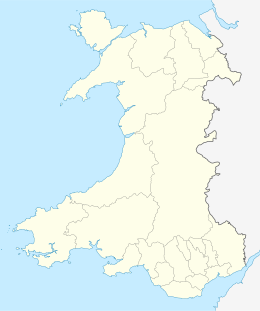  Ynys Bery | |
| Geography | |
|---|---|
| Coordinates | 51°50′56.72″N 5°20′27.02″W |
| Administration | |
Wales | |
| County | Pembrokeshire |
| St David's and the Cathedral Close | community |
| Demographics | |
| Population | 0 |
Etymology
The island's name in Welsh means falcon's Island, according to an 1852 book,[1] but an earlier work of 1811 by Richard Fenton calls it the kite's island.[2]
History
Fenton, in 1811, describes the island, and its neighbour Ynys y Cantwr:
...with high craggy cliffs, producing a thick matted herbage mixed with scurvy-grass and the sea pink, affording pasture for a few sheep, and stocked with rabbits, puffins, elygogs,[note 1] gulls and other sea fowl.[2]
In 1903, the S.S. Graffoe (a 2,996-ton steamship bound from Glasgow to Montevideo with 3,800 tons of coal) struck Ramsey Island and sank at the northern end of Ynys Bery. The wreck lies at a depth of 15 metres, and is one of many Pembrokeshire wrecks popular with divers.[4]
Geography
Ynys Bery's highest point is 71 metres[5] (233 feet), the highest of Wales's islets.
Flora and fauna
Together with neighbouring Ynys Cantwr, Ynys Bery is a breeding ground for lesser black-backed gulls. In the spring the island is covered with pale blue squill.[6]
Notes
- 'Elygogs' probably means guillemots.[3]
References
- Will. Basil Jones (1852). The History and Antiquities of Saint David's: By Will. Basil Jones and Edw. A. Freeman. Vol. 1. Pickering, Parker and Petheram. p. 17.
- Fenton, Richard (1811). A historical tour through Pembrokeshire. Longman, Hurst, Rees, Orme & co. p. 125. Retrieved 7 February 2019.
- Driver, T. (2018). "The Green Bridge (of Wales) and Elegug Stacks, Stack Rocks (407869)". Coflein. RCAHMW. Retrieved 27 February 2020.
- "Wreck of the Graffoe". Cardiff Times. 14 March 1903. Retrieved 11 August 2019.
- Ynys Bery on www.hill-bagging.co.uk
- "Ramsay Island". Pembrokeshire Coast National Park. Retrieved 11 August 2019.
External links

Pembrokeshire | ||
|---|---|---|
| Principal settlements |  | |
| Towns and villages |
| |
| Castles |
| |
| Historic cantrefi and hundreds |
| |
| Islands and headlands |
| |
| Rivers |
| |
| Topics |
| |
На других языках
- [en] Ynys Bery
[fr] Ynys Bery
Ynys Bery est une île du pays de Galles située dans le Pembrokeshire, au sud-ouest de l'Ynys Cantwr.Другой контент может иметь иную лицензию. Перед использованием материалов сайта WikiSort.org внимательно изучите правила лицензирования конкретных элементов наполнения сайта.
WikiSort.org - проект по пересортировке и дополнению контента Википедии