geo.wikisort.org - Mountains
Monte Civetta (3,220 m) is a prominent and major mountain of the Dolomites, in the Province of Belluno in northern Italy. Its north-west face can be viewed from the Taibon Agordino valley, and is classed as one of the symbols of the Dolomites.[2]
| Monte Civetta | |
|---|---|
 | |
| Highest point | |
| Elevation | 3,220 m (10,560 ft) |
| Prominence | 1,454 m (4,770 ft)[1] |
| Listing | Alpine mountains above 3000 m |
| Coordinates | 46°22′48″N 12°03′12″E |
| Geography | |
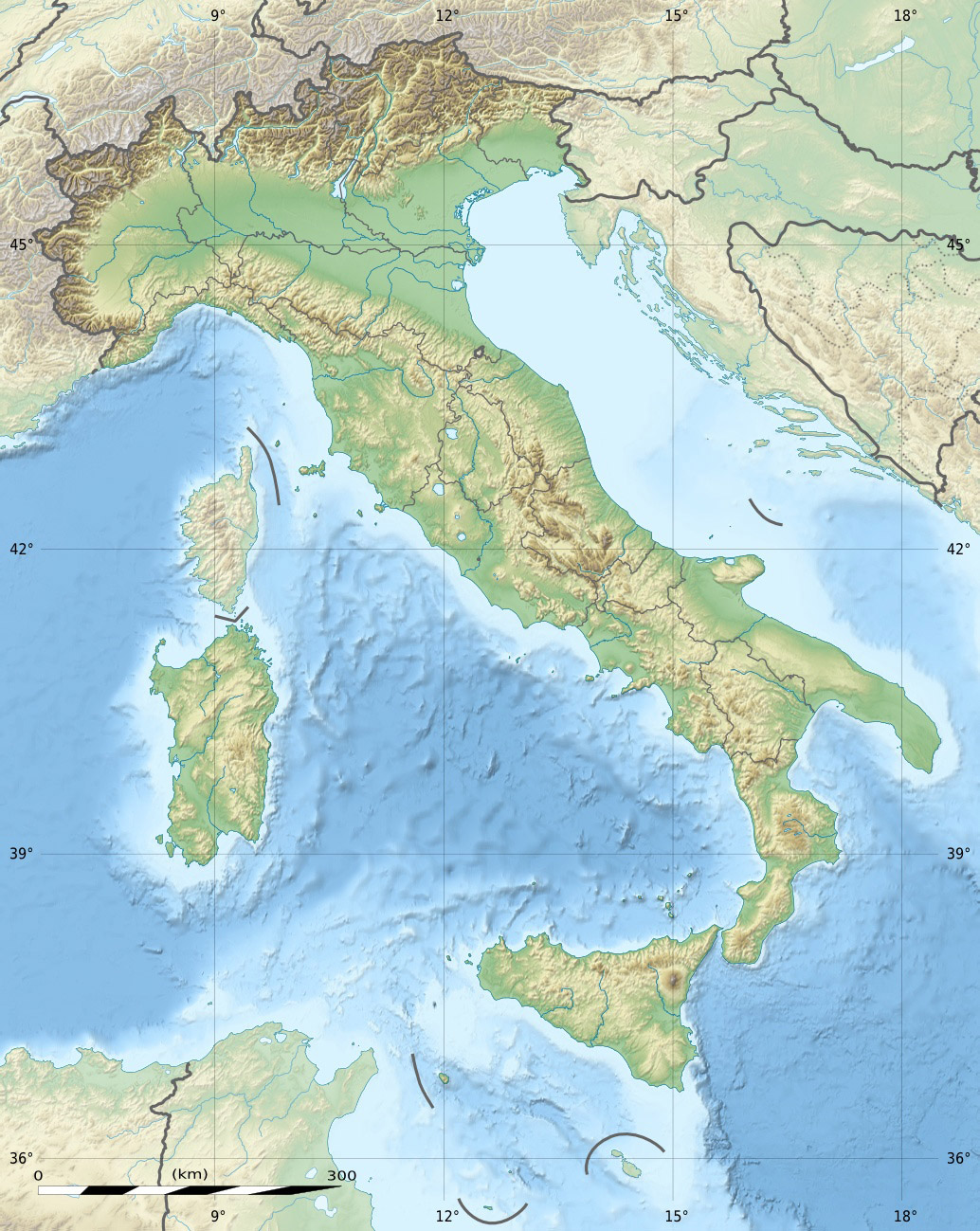  Monte Civetta Belluno, Italy | |
| Parent range | Dolomites |
| Climbing | |
| First ascent | 1855 |
The mountain is thought to have been first climbed by Simeone di Silvestro in 1855, which, if true, makes it the first major Dolomite peak to be climbed. The north-western face, with its 1,000-metre-high cliff, was first climbed in 1925 by Emil Solleder and Gustl Lettenbauer. It is historically considered the first "sixth grade" in six-tier scale of alpinistic difficulties proposed by Willo Welzenbach (corresponding to 5.9).[3] Thirty years later UIAA used this as a basis for its grading system.
The famed Svan mountain climber Mikhail Khergiani died in a climbing accident on Monte Civetta in 1969.[4]
References
- "Monte Civetta". Peakbagger.com. Retrieved 13 January 2015.
- "Monte Civetta - summitpost.org". summitpost.org. Retrieved 13 January 2015.
- Scott, Doug (1981). Big Wall Climbing. Oxford University Press. pp. 27–33. ISBN 978-0195202700.
- "Альпинисты Северной столицы. ХЕРГИАНИ МИХАИЛ ВИССАРИОНОВИЧ". www.alpklubspb.ru. Retrieved 2020-04-30.
External links

Authority control | |
|---|---|
| General |
|
| National libraries | |

 | This article on a location in Veneto is a stub. You can help Wikipedia by expanding it. |
На других языках
[de] Monte Civetta
Der Monte Civetta – meist nur Civetta (ital. für Eule) genannt – ist ein 3220 m s.l.m. hoher Berg in den Dolomiten und gibt der Civettagruppe ihren Namen, welche in der italienischen Provinz Belluno (Region Venetien) liegt.- [en] Monte Civetta
[fr] Civetta
La Civetta est un sommet des Alpes culminant à 3 220 mètres dans les Dolomites, en Italie (Vénétie). Au sens large, la Civetta est un groupe montagneux des Dolomites.[it] Monte Civetta
Il Civetta (El Zuìta in ladino veneto) è un gruppo montuoso appartenente alle Dolomiti di Zoldo, situato in provincia di Belluno, che separa la Val di Zoldo dall'Agordino, facendo da cornice al caratteristico paesino di Alleghe.Другой контент может иметь иную лицензию. Перед использованием материалов сайта WikiSort.org внимательно изучите правила лицензирования конкретных элементов наполнения сайта.
WikiSort.org - проект по пересортировке и дополнению контента Википедии