geo.wikisort.org - River
Kaveri is a tributary of the Narmada River in Madhya Pradesh, India. It has a length of 40 km, and a catchment area of 954 km².[1]
| Kaveri | |
|---|---|
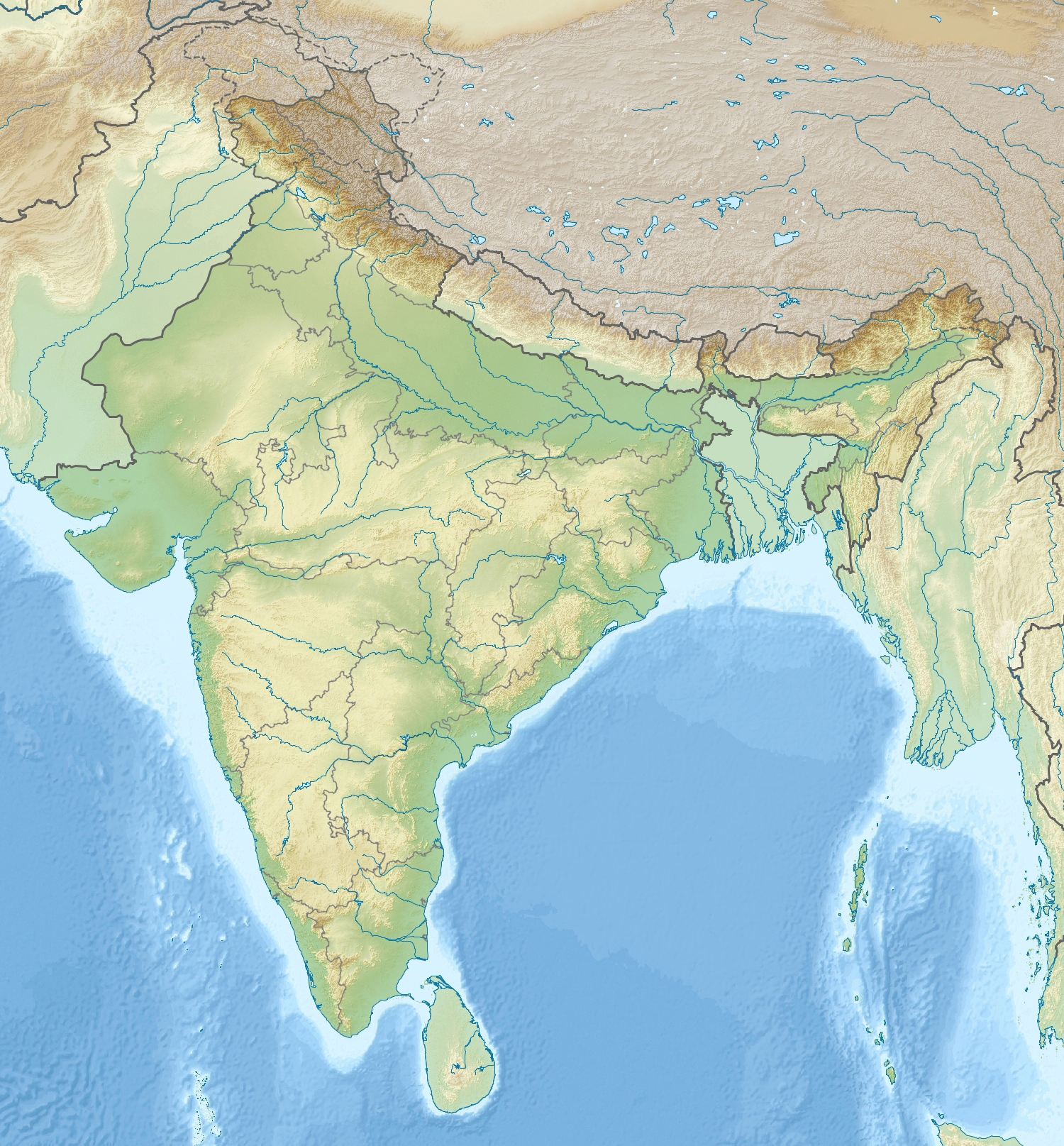  Location of the Kaveri-Narmada confluence | |
| Location | |
| Country | India |
| State | Madhya Pradesh |
| Physical characteristics | |
| Mouth | [Narmada River] |
• location | Near Omkareshwar |
• coordinates | 22.231973°N 76.170469°E |
• elevation | 173 m |
| Length | 40 km (25 mi) |
| Basin size | 954 km2 (368 sq mi) |
| Basin features | |
| River system | Narmada |
The Kaveri river meets the Narmada river near Mandhata (Omkareshwar), around 882 km from Narmada's source.[1] The Narmada Mahatmya texts, which glorify the Narmada river, extol the confluence (sangam) of Narmada and Kaveri as a holy place (tirtha). Along with its bigger namesake in the South, the Kaveri river of Madhya Pradesh has been mentioned in the Matsya and the Kurma Puranas.[2]
The Matsya and the Padma Puranas declare:[2]
The junction of the Kaveri and Narmada is famed throughout the world; it destroys all sins; one should bathe there because the Kaveri is very sacred and the Narmada is a great river; whatever benefit a man may gain between the Ganges and Yamuna (that is, at Prayaga), the same accrues to him when he bathes at the Kaveri-sangama.
According to the Matsya Purana, Kubera performed a tapas in honour of Shiva at the confluence of Kaveri and Narmada, which made him the lord of yakshas.[3] The Kurma Purana also similarly praises the confluence, declaring that it destroys guilts. It recommends that one should bathe and worship Shiva at this confluence.[4] The Agni Purana also mentions a Kaveri sangama, which F. E. Pargiter identifies with the Kaveri-Narmada confluence.[2]
References
- K. Sankaran Unni 1996, p. 16.
- Pranab Kumar Bhattacharyya 1977, p. 272.
- Jürgen Neuß 2012, p. 155.
- Pranab Kumar Bhattacharyya 1977, p. 112.
Bibliography
- K. Sankaran Unni (1996). Ecology of River Narmada. APH. ISBN 978-81-7024-765-4.
- Pranab Kumar Bhattacharyya (1977). Historical Geography of Madhya Pradesh from Early Records. Motilal Banarsidass. ISBN 978-0-8426-9091-1.
- Jürgen Neuß (2012). Narmadāparikramā - Circumambulation of the Narmadā River. BRILL. p. 155. ISBN 978-90-04-23028-6.
External links
Другой контент может иметь иную лицензию. Перед использованием материалов сайта WikiSort.org внимательно изучите правила лицензирования конкретных элементов наполнения сайта.
WikiSort.org - проект по пересортировке и дополнению контента Википедии